
INFORMATION FOR BUYERS
Buying real estate in Mexico is very similar to owning property in the USA or
Canada. The one exception is that by law the title to land within 50 kilometers
(about 30 miles) of the coast or border must be held in trust or Fideicomiso
as they are called in Mexico. (usually by a bank), with the purchaser being the
beneficiary of the trust.
The beneficiary (you) has all the same rights to the property that you would have
if you held the title outright; you can rent or lease it, build on the land and/or
expand construction (with the same zoning rules as apply to Mexican citizens),
sell it, will it to your descendants, etc.
This is the government’s way of getting around a constitutional article which
prohibits outright ownership of these lands by foreigners. Trusts are valid for 50
years and are renewable.
The only negative of this trust is that it cost $500 US a year. The positive about
this trust that it also acts like a will as you will be required to disclose on this
document who you wish to inherit this property if you pass on. Your will in
Canada or the US is not valid in Mexico.
The Capital Gains is usually paid by the seller unless the sale price is below the
assess value. In this case then the buyer may be responsible for a capital loss.
Gerard will make sure that his clients will know if this exist and what is the
amount before you make your decision to purchase.
Down payment on an existing property is usually 10% of the accepted offer
which will be wired to an escrow account. If purchasing a new construction unit,
then the down payment is larger (35%) and on most occasions will go directly to
the developer.
- NOTE •
Some of the percentages below vary depending on the state in which the
property is located. The following is based on Nayarit state:
1) TRANSFER TAX
This is a transfer of property tax. This is paid by every purchaser to the local
government. In Nayarit it is a flat 2% of the purchase price; In Jalisco it is similar
but varies depending on value of property.
As opposed to the US way state and local government collect the property taxes,
which, when added are very high, even astronomical in some areas, in Mexico
the authorities charge this 2% at the beginning.
In contrast, they do not charge high annual property tax. The notary is
responsible to collect this tax; the notary is also personally liable for failure of
doing so.
2) REGISTRATION FEE
This is a tariff of around 0.9% paid to the Office of the Public Registry (a State
Office). In this office, as per Mexican law, all deeds (including property’s deed of
trusts) must be registered.
You have in the US something similar. It is the obligation of the notary to do the
process of registering your property in this office. The legal aspect of the Public
Registry is that, in this way, it is known that you are the owner of the trust rights
of the said property, as from a given date.
This way you are protected against claims that the seller may have had prior
to the sale of the property. This item is related to the search of liens and
encumbrances and it corresponding certificate, as explained below.
In the above two items you have 2.9% of the total percentage (average 5% as
mentioned above) that will be calculated as total closing costs.
3) MISCELLANEOUS, CATASTRO (PROPERTY TAX OFFICE) APPLICATION AND
REGISTRY OFFICE COPY.
Once you have signed the deed of trust, the documents not only are registered
in the Public Registry but also at the Muncipal level in the CATASTRO (cadastre)
OFFICE for two purposes: one for census, that is to register new constructions,
locations of properties, etc.; but also, for the annual property tax.
The Catastro office is a local office. At the registration they will give you a
property tax number (Registro Predial). Yours are to be paid every year at the
beginning of the year and is called Impuesto Predial (property tax).
It is important to remember that the city will not send you a bill but it your
obligation to go to make the payment. This errand is normally done by the
administrator of the condominium as a service, but it is not the administrator’s
obligation to do so. It remains the owner responsibility and you can arrange this
service on a request basis.
The municipality normally offers a discount to the annual tax if paid within the
first month of the year.
4) APPRAISAL
This appraisal is done by a bank and municipal authorized Appraiser, normally a
civil engineer.
Appraisers are normally chosen by the notary themselves and they may be
working with different, if not all, notaries of the area.
The appraisal involved is not for commercial purposes, IE, to establish a market
price, rather it is for property tax purposes. The figures given are normally lower
than the market values.
For tax purposes, the law establishes that the value chosen by the municipality
to base the property tax is the higher of the two of the prices established in the
purchase agreement or the appraisal.
So, it may be the case that the property is appraised at 10 pesos, and the
purchase agreement established the price of 1 peso, the municipality will take
the appraised value as the base for the property tax.
The other way around, the purchase price is 10 pesos, and the appraised value is
1 peso, the municipality will take the purchase price as the base for the property tax.
5) THE CERTIFICATE OF NO LIENS AND ENCUMBRANCES
The notary will do document research in the State Public Registry and
municipal CATASTRO office and get a history of the property. This history is
written in the deed of trust as background information.
The search is for the purpose of finding liens and encumbrances that may
hinder the transfer of the property to third parties that are purchasing in good
faith.
The notary will also search at the municipality if the property is current in their
property taxes. If there are no liens or encumbrances nor outstanding property
tax payment, the deed will be authorized to be issued.
The corresponding CERTIFICATE OF NO LIENS AND ENCUMBRANCES issued by
the Public Registry and THE CERTIFICATE OF NO OVERDUE TAXES issued by the
municipality are annexed to your deed of trust. Similar certificates are acquired
for water and property taxes to ensure there are no past due amounts.
6) THE TRUST FEES
These are the fees related to setting up a trust. The process is as follows:
a) Previous to drafting the deed of trust, the notary will request a permit
from the Federal foreign affairs office to set up, as per the law, a trust and its
corresponding deed in the benefit of the named buyer.
b) The Office will grant the permit and then the notary will request the
bank to set up the trust and draft the deed of trust.
This draft will include the certificates above mentioned and the history
of the property (antecedents), the information about the seller and the
purchaser and all the information about prices, including the text of the
condominium regime, the registration of the condominium regime in the
Public Registry, etc.
c) The bank will review the draft deed and all the documents when
accepted send them back to the notary to have them signed by the
purchaser and the seller.
d) Once signed by the seller and purchaser, the bank will sign the deed,
which then is registered in the federal office of foreign investment
e) The expenses that are itemized in the trust cost of your closing cost sheet
correspond to federal government tariff to grant the permit (10,595 pesosfixed cost), registration of the trust, the bank review and acceptance of the
drafted deed of trust, and the payment in advance of one year of the bank ́s
fee to hold the trust.
7) NOTARY FEES
These are the legal fees that the Notary will charge for the work done on your
behalf. Normally, notaries will charge from 0.75% to 1% or more of the purchase
value for their own fees. In our case, due to the volume, the notary that gave us
the estimate. charges on the low side of the market fees.
8) THE IVA TAX
This is the equivalent of a sales and service tax in the US, which is paid only on
the notary legal fees. In Mexico the sales tax is 16%.
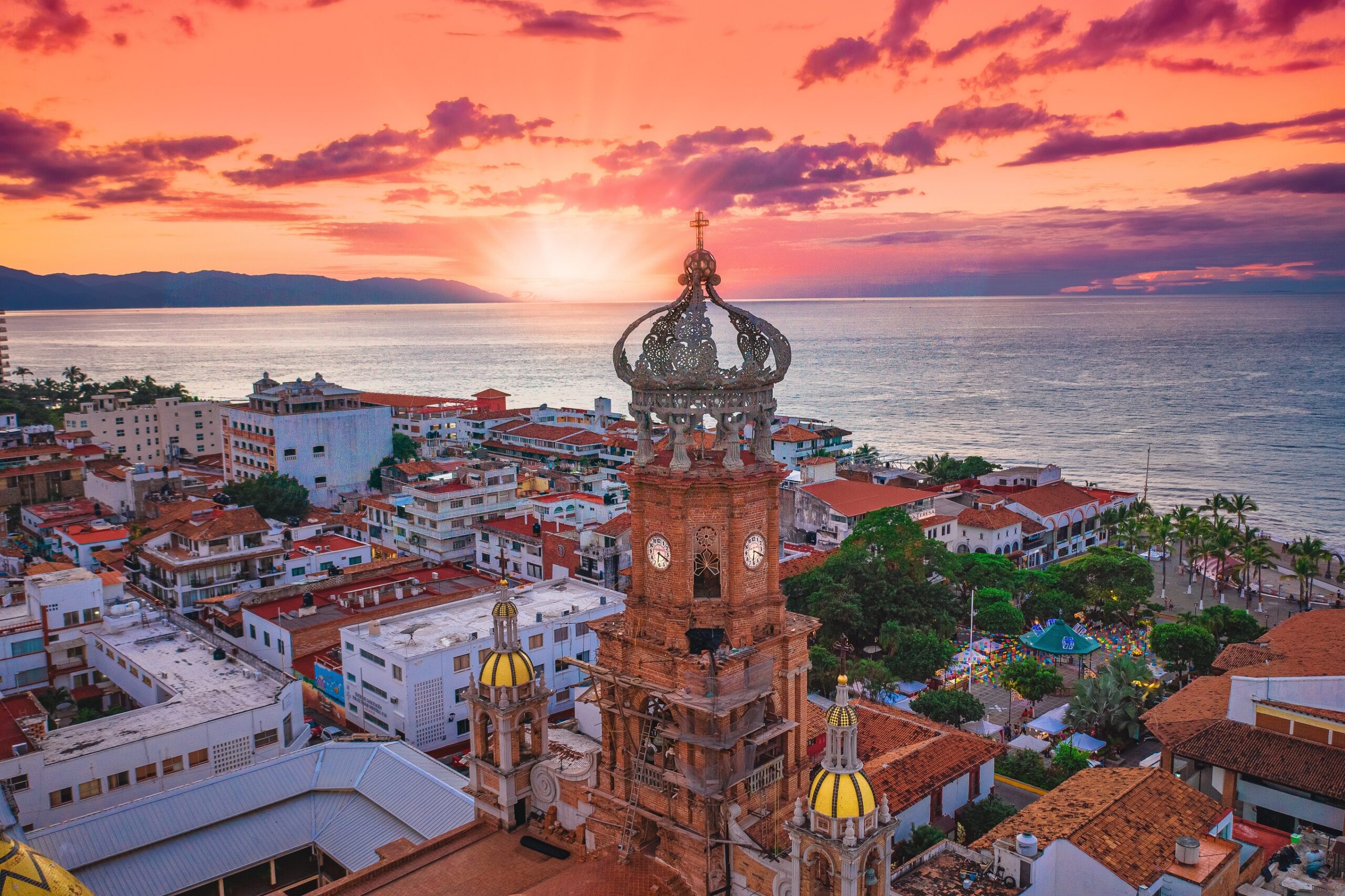
Your home in the paradise of Puerto Vallarta will be one of the finest
investments you can make, both financially and in the resulting lifestyle. Vallarta
has a huge ‘ex-patriot’ community where you will make new life-long friends
amongst not only your fellow ex-pats’, but also among the friendly residents
who will welcome you to the community! You won’t be alone…as we said,
Vallarta is already home to THOUSANDS of your compatriots!
I hope you have found this explanation of closing costs to be useful. Please
contact me with any questions you may have!